Sep 12, 2026News & Insights
Adult E-Moto Import Compliance for US and EU Markets
A B2B importer's guide to adult e-moto import compliance in the US and EU, covering many-state moped rules and L1e-B versus EPAC for 2000 W models.
WHY COMPLIANCE IS THE FIRST QUESTION AN IMPORTER MUST ANSWER
A 2000 W adult electric motorcycle looks like a single SKU on a quotation sheet. The moment it lands in a container it becomes two different regulatory objects: an off-road or on-road vehicle depending on configuration in the United States, and an L-class vehicle under the European framework. Adult e-moto import compliance is the first decision gate for any distributor, dealer, or brand owner evaluating off-road-style electric motorcycles for street or trail use. Get the gate wrong and the unit sits in customs, the dealer pays demurrage, and the launch window closes. This guide walks importers through the two most common frameworks, what changes when a model crosses 250 W or 25 km/h, and where certification support from the manufacturer actually fits in.
THE UNITED STATES: NO FEDERAL PERMIT, MANY DIFFERENT STATE RULES
There is no single federal license to ride an electric motorcycle on public roads in the US.
The federal layer addresses safety standards, not driver licensing. NHTSA administers the Federal Motor Vehicle Safety Standards, and most electric two-wheelers with a motor above a low wattage threshold fall under consumer product or on-road vehicle categories rather than a dedicated e-moto code. State departments of motor vehicles set the licensing, registration, helmet, and age rules, which means the same 2000 W unit can be street legal in one state and treated as an off-road-only machine in the next. Many states have some form of moped, motor-driven cycle, or motorcycle classification that an electric two-wheeler can be slotted into, but the threshold that triggers each class is set state by state and the equipment list that goes with each class varies as well.
WHAT THE POWER CATEGORY MEANS FOR RESELLERS
The North American powersports retail channel groups motorcycles, mopeds, ATVs, side-by-sides, and personal watercraft under one buying, warranty, and dealer-training umbrella.
For an importer, the practical meaning is that distributors and dealers who already sell internal-combustion powersports expect powersports-level after-sales support, dealer training documentation, and warranty processes that match what an ICE motorcycle buyer already receives. Treating a 2000 W e-moto as a generic bicycle-class product in the US market tends to create support gaps that resellers do not want to absorb. Aligning the e-moto program with the existing powersports warranty and parts pipeline is usually faster and cheaper than asking the channel to learn a parallel structure.
On a 2000 W model, street legal status is set state by state and configuration by configuration.
Headline marketing often labels a 2000 W electric motorcycle as street legal. The honest version is that street legality depends on which state the unit is registered in, what speed or power ceiling that state applies to mopeds or motor-driven cycles, and whether the unit carries the equipment that state requires (lights, mirrors, horn, VIN plate, title document). Off-road configuration is the default for most imported e-motos in this power class, and converting to street use means adding state-specific equipment and going through state titling. Importers who promise street legal without naming the state and the equipment list set themselves up for warranty disputes.
THE EUROPEAN UNION: TWO REGIMES, ONE HARSH DIVIDING LINE
Electrically power assisted cycles and L1e vehicles sit on opposite sides of a legal line drawn at 250 W and 25 km/h.
Under EU regulation, an EPAC (Electrically power assisted cycle, following the EN 15194 reference standard) is a pedelec that assists the rider up to 25 km/h with a motor of 250 W or less, with pedal-assist and no throttle-only operation. EPACs are treated as bicycles for type approval: no registration, no plate, no insurance, helmets only where national cycling law requires them. Anything outside that narrow envelope — a throttle-only mode, a higher continuous rated power, or higher assisted speed — leaves EPAC and enters the L-category vehicle framework, which is fully type-approved under EU Regulation 168/2013 and requires homologation, plates, insurance, and usually a helmet.
L1e-B is where many 2000 W off-road e-motos land when they enter EU traffic.
L1e is the moped class. L1e-B is the subcategory for mopeds with a design speed up to 45 km/h. A 2000 W e-moto with no pedals, no throttle restriction, and a top speed above 25 km/h does not fit EPAC. It fits L1e-B if its design speed is held at or below 45 km/h, or another L subcategory if it is faster. L1e-B requires EU type approval before registration, which means the manufacturer holds a certificate of conformity, the importer registers the vehicle, and the end user carries insurance and the national equipment a moped needs (helmet, plate, lighting) at point of use. Going to market as an EPAC when the unit is really L1e-B is a frequent compliance mismatch that EU customs and registration authorities do flag.
National road rules add a second layer on top of EU type approval.
Once a vehicle is type approved under EU law, each member state still applies its own rules on minimum age, helmet, licence category, lane access, and passenger carriage. Member states set different minimum ages and licence requirements for moped-class vehicles — check the rules in each market you sell into. Importers building a multi-country rollout should expect to brief dealers on a country-by-country summary rather than a single EU-wide rule.
HOW HIGH-POWER MODELS FALL INTO EACH FRAMEWORK
Around 250 W and 25 km/h the regulatory treatment flips, and the model is on a different compliance path from that point upward.
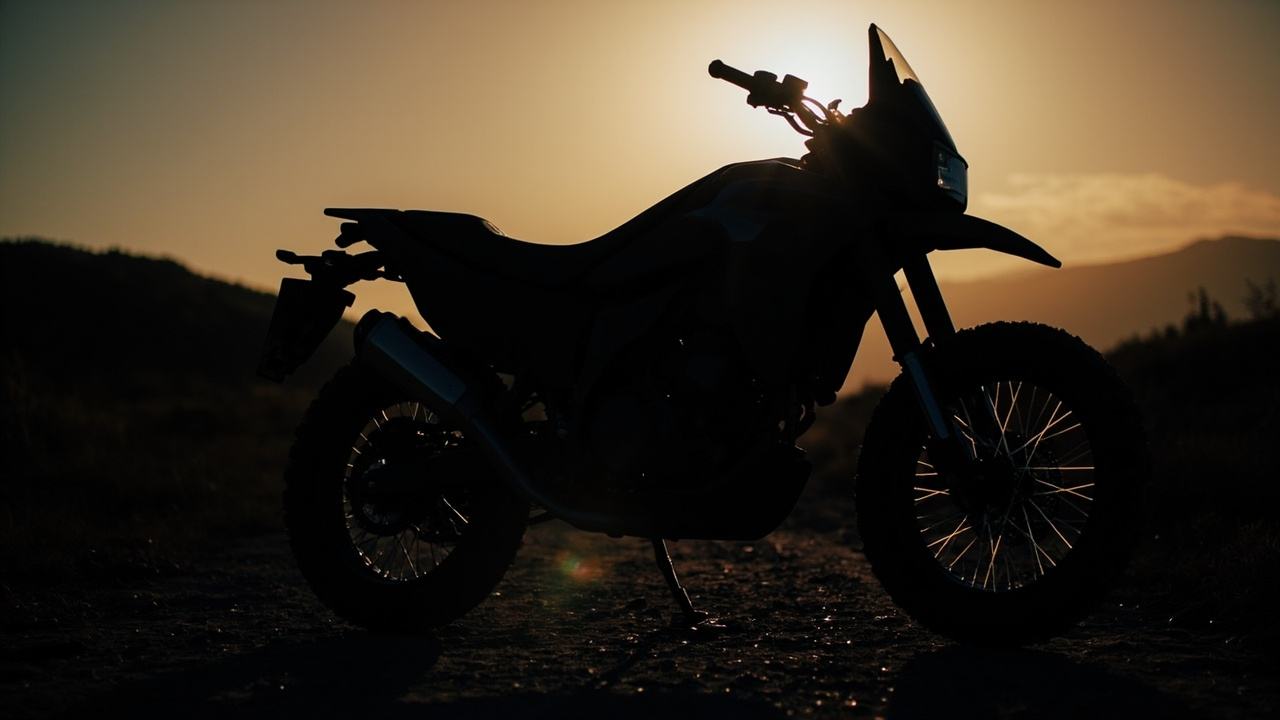
CaddyTrail's G73 adult electric motorcycle is specified at 2000 W motor power, peak torque of 120 N·m, and a range of 100-120 km, with the manufacturer positioning it for steep slopes, heavy loads, and long outdoor rides. On paper, the power and the absence of a pedal-only mode place it well outside EN 15194 in the EU. In the US, it sits in the band that states typically map to either moped or off-road-only categories depending on declared top speed, equipment fitment, and titling. The two compliance journeys for the same SKU are not symmetric, and importers planning a launch should treat the US and EU documentation as two separate workstreams, not one.
The off-road lane is the cleanest starting point for new importers, within its limits.
Selling a G73-class unit for off-road, private-land, fleet, or closed-course use keeps the regulatory load narrower. Off-road units that are genuinely not placed on the public road and are not registered as an L-class vehicle are outside the EU type-approval regime for on-road mopeds; the moment such a unit is registered or ridden on public roads in a member state, the L-class framework applies. Importers who start in the off-road lane can validate demand, build dealer training, and qualify for street configuration as a second step once the per-state or per-country paperwork is mapped. The trade-off is marketing scope: off-road-only claims limit the addressable audience to private property, sport, and fleet buyers until street configuration is approved.
WHAT AN IMPORTER ACTUALLY NEEDS TO SHIP A CONTAINER
Documentation tends to determine whether the first container moves on time.
A workable first shipment for a 2000 W e-moto destination usually requires a commercial invoice with accurate HS code, a packing list that matches the SKU exactly, a certificate of origin from the manufacturer, and any safety or EMC documentation the destination customs office asks for. US importers should expect to file entry through a customs broker, pay applicable duties, and respond to any Consumer Product Safety Commission or NHTSA query if the unit is flagged at port. EU importers handling an L1e-B unit must hold a valid EU type-approval certificate for that specific variant and accompany each unit with a certificate of conformity; EPAC units follow EN 15194 documentation and the lower bicycle-equipment regime. Models that fall between categories, or that are configured for off-road only, require language in the user manual and sales channel that is consistent with the declared use.
Battery transport has its own rule set that runs in parallel with vehicle compliance.
Lithium-ion batteries in this class are governed by UN 38.3 for transport, by IATA rules for air freight, and by IMDG for sea freight. Shippers must keep a current test summary on file. Importers who overlook this at the spec stage can find their first container held while the battery documents are reconstructed, regardless of how clean the vehicle compliance file is.
WHERE FACTORY CERTIFICATION SUPPORT FITS
Certification for a model of this power class is confirmed per model and per target market; there is no single factory certificate that covers all destinations.
CaddyTrail operates as a factory-direct supplier serving distributors, brands, and golf courses worldwide. The manufacturer is Shenhaiyuan (Dongguan) Intelligent Technology Co., Ltd., with a daily production capacity of 5,000+ units, 30+ technical patents, and shipments to 30+ countries. At the company level, the manufacturer references international certification support covering CE, FCC, UL, and CPC where applicable to specific models. For an adult e-moto in the 2000 W class, importers should treat those references as the manufacturer's stated scope of support rather than as a per-SKU certificate, and they should request the actual certificate file for the exact variant and the exact destination before placing a volume order.
Certificate scope is what the customs broker and the destination registration authority will ask for, not a generic compliance letter.
That scope typically covers the model variant, the destination market, the testing standard (for example EN 15194 for EPAC, EU Regulation 168/2013 for L1e, FCC Part 15 for the US, or UL listings on the battery and charger), and the issue and expiry dates. A certificate dated, issued to the wrong entity, or covering a different variant will be rejected at the same gate a missing certificate is. Build the destination-by-destination certificate matrix before the first PO, not after.
HOW TO PLAN A US AND EU ROLLOUT WITHOUT OVERPROMISING
Three rules keep a launch on the right side of compliance.
First, match marketing language to the declared use. If the unit is sold as off-road, dealer listings, owner manuals, and online product pages should say off-road and explain where it can be ridden (private land, closed course, designated trails). Second, pick a lane per market. Many importers start with off-road configuration for the first quarter, qualify a street configuration for the states or member states they can register cleanly, and only then expand. Third, ask the manufacturer for the certificate per destination, not a generic compliance letter. The paperwork that customs, dealers, and end users ask for is always SKU-specific and destination-specific, and the supplier conversation should mirror that.
RISK NOTES FOR THE IMPORTER
Regulation in both jurisdictions changes, and this guide is a working overview rather than legal advice.
As of 2026, the US moped and motor-driven cycle thresholds and the EU L-category type-approval framework are the operative references. Both regimes update on a regular cycle, and individual member states revise their road rules outside the EU framework. Importers should re-check the destination rule at the time of each purchase order, treat the customs broker and a local compliance advisor as part of the project team, and keep the manufacturer's certificate file version-controlled per shipment. This article is a working overview for B2B buyers and is not a substitute for legal counsel in the destination market.
TALK TO US ABOUT YOUR TARGET MARKET
If you are evaluating an adult electric motorcycle such as the G73 for the US, the EU, or both, our team can walk through the off-road configuration, available street configuration, and the documentation package per destination. Tell us your target market, expected unit volume, and the compliance lane you want to start in, and we will line up the right configuration with the certification package your customs broker and dealer network will need.
Share your destination countries and intended use case with our B2B team to start the compliance conversation.